SEO Interview Questions ( Part-2)
Q. What are LSi Keywords?
Ans:- LSI stands for Latent Semantic Keyword. In a simple manner, you can say LSI keywords are the synonyms of your primary keywords.
Q. What are back links?
Ans: – Back links are the incoming link from anther website to your website. The back link is very important part of SEO. If you have a good amount of high authority website then your website easily rank on Google.
Q. What is a Do-follow Link?
Ans: – As the name suggests, it tells Google to follow the link and pass all the link juice to the external links. In simple words, Do-follow links are more beneficial compared to a no-follow back link. Google is more interested in Do-follow back link.
Q. What is a No-follow link?
Ans: – No-follow link tells Google not to follow the link and also not to pass the link juice to any external websites. No-follow links have zero to no relevance. However, getting a no follow link from a very high authoritative website is still helpful.
Q. What is SEO & why is it so important?
Ans: – Search Engine Optimization (SEO) refers to the method used to increase a website’s position on search engine results pages (SERPs) on sites such as Google, Yahoo, or Bing. Developing an SEO strategy for your business can help draw consumer traffic to your website as well as grow your sales and revenue. To get you started on your SEO strategy development, here is a little background to understand how search engines, such as Google, use metrics to rank organic search website placements.
Q. What is a Search Engine?
Ans: – A search engine is a web-based software system which is developed to search and locate relevant information on the World Wide Web. Search engines generally answer the queries entered by the users and give them a list of search results.
Q. Name of a few search engines.
Ans: – Google, Bing, Yahoo, Baidu, Yandex and DuckDuckGo.
Q. Who are the Founders of Google?
Ans:- The founders of Google are Larry page Sergey Brin.
Q. What you Know About SEO?
Ans: – It is process of getting traffic from free and paid listing on the search engine like.
Yahoo
Bing
Q. How to get Top Position in SEO?
Ans: – With the help of two factors we get top position in Search Engine.
On Page Optimization
Off Page Optimization
Q. In which year was Google Established?
Ans: – Google was established on 4th September, 1998.
Q. What is World Wide Web?
Ans: – The World Wide Web (WWW) or the Web is an information system on the internet which allows documents to be connected to other documents by hypertext links, enabling the user to search for information by moving from one document to another.
Q. What is a Domain?
Ans: – Domain is a distinct subset of the internet with addresses sharing a common suffix or under the control of a particular organization or individual.
For example, in www.facebook.com, facebook is the domain.
Q. What is a website?
Ans: – A website is a collection of related web pages, including multimedia content, typically identified with a common domain name, and published on at least one web server.
Q. What is crawling?
Ans: – A crawler is a program that visits Web Sites and reads their pages and other information in order to create entries for search engine index. The major search engines on the Web all have such a program, which is also known as a “spider” or a “Bot.”
Q. What is indexing?
Ans: – Indexing is the process of adding WebPages into Google search. Depending upon which Meta tag you used (index or No-Index); Google will crawl and index your pages. A no-index tag means that page will not be added into the web search’s index.
Q. Difference between Crawling & indexing?
Ans:- Crawling Means the search robot crawl or fetch the web pages while indexing means search robot Crawl the web pages, saved the information and it appear in the search engine result page.
Q. What is SERP?
Ans: – Search Engine Result page or SERP refers to the page that is displayed when a specific search query is entered over the search engine. Apart from showing a list of results, SERP might also include advertisements.
Q. What do you mean by Inbound Link?
Ans: – The incoming links to your website or webpage from the different page of the same website are called as back link. It is also called as an inbound link.
Q. What are outbound links?
Ans: – The Outbound links are a links which are linked from your website to anther webpage or website.
Q. What is Organic Result?
Ans: – Organic result in SEO denotes to the listing of the web pages that are most relevant to the search query entered by the user. It is also referred to as “free” or “natural” result. Getting a higher ranking in the organic result over the search engines is the very purpose of SEO.
Q. What are paid results?
Ans: – Paid results in SEO mean the exact opposite of organic results. It generally denotes to advertisements that are displayed above the organic results.
Several website owners make payments to Google to display their websites for certain search terms or keywords. Paid results show up when some user enters a search query with those keywords.
Q. Describe about Googlebot?
Ans: – Caching, Crawling and indexing of a webpage are done through Googlebot by collecting details from that webpage. To index and update a webpage Google uses the Googlebot (Web Spider).
Q. What is Cross-linking and what is the function of Cross linking?
Ans: – Cross-linking is used to refer the process of linking one site to another site.
It provides the users with reference sites that contain the content related to the search.
The 2 Websites cross-linking do not be owned by the same person.
In other words, cross-linking is a barter wherein I link to you and you link to me.
It could be a 2-way link i.e. 3-way link. In a 2 way link site A links to site B and site B links to Site A. In a 3 way link, Site A links to site B, Site B links to site C and Site C links to site A.
Q. What is the Benefit of using keyword in SEO?
Ans: – Keyword is a single word, and while a combination of those keywords makes phrases. These are used in the search engines to populate the subjects over the internet. Search engine stores keywords in the database, and when search is done, it will come up with the best possible match.
Q. What is the definition of keyword?
Ans: – A keyword in the context of search engine optimization is a particular word or phrase that describes the contents of a Web page. Keywords are intended to act as shortcuts that sum up an entire page.
Q. What is long Tail keyword?
Ans: – A long-Tail keyword is a keyword phrase that contains at least three words (though some say two or more is considered long-tail).Long-tail keywords are used to target niche demographics rather than mass audiences.
Q. How to types of queries is classifieds in SEO?
Ans: – In General, keywords can be classified into 3 types. Informational, Navigational & Transactional.
Q. Can you briefly explain about each of these types?
Ans:-
Informational: The intention of the user is to get knowledge about a specific topic/ service. Ex: Who are founders of Apple?
Navigational: Queries that seek information about specific branded site or website. Ex: Apple Mac Support
Transactional: The user intention is to find a product/ service and it has transactional nature. Ex Buy iPhone Online.
SEO Interview Questions ( Part-1)
Q. What is Search Engine?
Ans: – A search Engine is a web-based software system which is developed to search and locate relevant information on the World Wide Web. Search engines generally answer the queries entered by the users and give them a list of search results.
Q. What is SEO ?
Ans:- In Simple words, SEO or Search Engine Optimization denotes to any activity performed for the improvement of Search Engine rankings of websites, products, services or other content. It shows unpaid results which is also referred to as “free”, “organic”, “natural” or “earned” results.
Q. What is the importance of SEO ?
Ans: – The Importance of SEO starts with desire of the companies to gain more traffic for their websites. The ranking over search engines matter because users pay more heed to the first 5 searches on Google. Moreover, the users tend to trust Google’s refined search results because they consider these searches to be more authentic and specific.
Q. Who are the founders of Google?
Ans: – The Founders of Google are Larry Page and Sergey Brin.
Q.What is a Domain?
Ans: – On the Internet, the domain is simply a part of the network address and acts as a descriptor for websites, includes Email addresses, website addresses and addresses of Internet Protocols such a SSH, IRC and FTP.
For example, in www.globalwebservice.in , globalwebservice is the domain.
Q. What is domain extension?
Ans: – Domain extension refers to the notation found at the end of web addresses. The extension is used to specify a country code or any web category. For example, .edu is a domain extension of specify educational institution as the web category.
Q. What is Web Server ?
Ans:- A Web Server is a computer program with an IP address and domain names that display web pages to users when requested. Web server accepts and processes requests sent via HTTP.
Q. What is Web Hosting?
Ans: – Web Hosting refers to any service providing space for websites over the Internet. Web host enables your website to be viewed by others via modem or network by making space over its server.
There are different kinds of web hosting services available today which are used as per the needs and requirements of the web developers.
Q. What is crawling?
Ans: Crawling or Web crawling refers to an automated process through which search engines filtrate web pages for proper indexing.
Web crawlers go through web pages, look for relevant keywords, hyperlinks and content, and bring information back to the web servers for indexing.
As crawlers like Google Bots also go through other linked pages on websites, companies build sitemaps for better accessibility and navigation.
Q. What is indexing?
Ans: – Indexing starts when the cradlings process gets over during a search. Google uses craw lings to collect pages relevant to the search queries, and creates index that includes specific words, or search terms and their locations.
Q. What is difference between SEO and SEM?
Ans: – Search Engine Optimization is widely known as SEO which is the process of improving the structure, content, and organization of your site so that the search engines can index them correctly. It also involves doing promotional activities to boost your search engine rank.
SEM: Search Engine Marketing is the online marketing process with a goal of getting more visibility in search engines by two ways: either getting more free traffic (SEO) or paid traffic (Paid search advertising). Through paid search advertising all you need to essentially buy advertising space in the search engine results.
Q. What is a keyword in digital marketing? How important is it for SEO?
Ans: – A keyword is a word that visitor enters into a search engine to find the needed information.
Q. List the key area where you can use keywords to optimize the site ranking?
Ans: – To get better page ranking you must use keywords in following areas.
Keywords:
In Website URL
In Website Title
In Meta Tag
In Page Content
In Body Text
In Headlines
Q. What is Robot.txt? Give its syntax.
Ans: – Robot.txt is a text file which is used to instructs the crawler that allow or disallow to visit some web pages of our site because that are not important to rank on SERP.
Syntax:
User agent: *(* for all crawler)
Allow: / (File Name )
Disallow / (File name )
Q. What is Reciprocal Link?
Ans:- A reciprocal link is an agreement between two webmasters to provide a hyperlink within their own website to each other’s site. Generally, this is done to provide readers with quick access to related sites, or to show a partnership between two sites.
Q. What is HashTag?
Ans:- Although hash tag were thought to be popular on Twitter specifically, the use of them also found its way on Facebook. Hashtags are social tools for tagging a particular post that relates to a popular trend or subject. The tag has a pound sign (#) at the beginning which helps marketers or other people to click on them and find the different mentions of the same topic. Commonly discussed topics include a marketing campaign, social movements, and popular events or brands.
Q. What is Google My Business?
Ans:- Google My Business is a free and easy-to-use tool for businesses , brands , artists, and organizations to manage their online presence across Google, including search and Maps. By verifying and editing your business information, you can both help customers find you and tell them story of your business.
Q. What is AMP?
Ans: – AMP or Accelerated Mobile Pages is an open-source coding standard for publishers to be able to load their sites quickly on mobile since mobile responsiveness could be unimpressive and slow compared to the desktop resources which are heavy and plenty.
Q. What is the process of SEO?
Ans: – Here are some points which we have to follow for SEO.
1. Basic keyword research
2. Competitor analysis
3. Write Unique and good length (Minimum 300 words).
4. Do On-page SEO.
5. Do Off-page SEO.
6. Analyses the reports from an Analytics Tool.
Q. Can you explain on-page SEO?
Ans:- On-page SEO is what you can do with your website for higher ranking on the search result. Here you can do content optimization; define Meta tag, HTML code, Image Alt Text, Keyword Density, etc.
On-Page is 100% in your control. You can do as you want.
Q. What do you understand about off-page SEO?
Ans: – Off-page SEO is what you do outside of your website. I mean to say you can create back links, content marketing, social media marketing, web page submission etc…
Off-page is not 100% in your control. You cannot do as your want.
Q. What is the difference between On-Page and off-page SEO?
Ans: – With on-page SEO you can be optimized for your content and web pages. You have full control of on-page SEO. However, Off-page SEO is something which you do to increase your brand present outside of your website.
Q. How to do Off-page SEO?
Ans:-
1. Guest Posting.
2. Article Submission.
3. Directory Submission.
4. Info graphics.
5. Commenting.
6. Forum Submissions.
7. Scholarships Link Building.
8. Competitor Link Analysis.
9. Press Release Submissions.
Q. What is White Hat SEO?
Ans: – The Legal way to build the link with Google terms and conditions.
Like, Guest Posting, Email Marketing, Info graphics etc…
Q. What is Black Hat SEO?
Ans: – The illegal way to build link. It doesn’t meet Google Term and Conditions. If you do black hat SEO then your site will be penalized by Google. Some of the Black Hat SEO Techniques include:
Link Farming
Hidden Text
PBNs (Private Blog Networks)
Keyword Stuffing
Cloaking
Gateway or Doorway pages
Q. What is the meaning of crawlers?
Ans: – Crawlers are Google robots that automatically index all new content over the Web.
Example:
Google Bot
MSnBot
Yahoo Slurp
Q. Which are basic tools need to start doing SEO?
Ans: – There are some tools are required to start doing SEO. Some are FREE and some tools are paid.
Google Keyword Planner – To do Keyword Research
Google Analytics – To track all the Data
Google Webmasters Tools or Search Console-Index web pages
Yoast Plugin – for on page SEO
Alex Rank shows your website rank all over the world.
Q. What is indexing?
Ans:- It’s very simple, adding new web pages in Google Search engine.
Q. What are SEPRs?
Ans: – SERPs stands for “Search Engine Result Page”
Q. What is Google Suggest?
Ans:- Google Suggest also known as Auto complete is a function developed by Google to help users complete their query while they are typing in the search bar.
Q. Explain Types of Keywords?
Ans: – There are three types of keywords:
1. Head Tail keywords
E.G:- PPC
2. Medium Tail Keywords
E.g.: What is PPC?
3. Long Tail Keywords
E.g.:- What is PPC? And how to do it?
Q. What are the limitations of the Title and Meta Tags?
Ans:- The Title tag should be between 66-70 characters, and Meta Description tag should be between 230-320 characters.
Q. What is Keyword Difficulty?
Ans: – Keyword Difficulty is a score which helps you determine whether to rank for this keyword is easy or difficult.

PPC Interview Questions
Q. Do you know the name of Google extension?
Ans: – 1. Site link Extension
2. Callout Extension
3. Structured snippet extension
4. Call Extensions
5. Message extension
6. Location extension
7. Affiliate location extension
8. Price extension
9. App extension
10. Review extension
Q. In ( PPC )Ad Words what is the limit set of the character?
Ans. 1. Headline 1 (30 Character)
2. Heading 2 (30 Character)
3. Description Line (80 Character)
Q. What type keywords in Ad words?
Ans. 1. Borad
2. Broad match modified
3. Phrase
4. Exact
5. Negative
Q. After creating Ad Words account what are the settings you cannot change?
Ans: – “Time Zone” and “Currency” settings
Q. Other Than CPC, what are the other two options for bidding?
Ans: – 1. CPA Cost per Action
2. CPM Cost per Thousand
Q. What is the negative keyword in PPC?
Ans: – Negative keywords are basically used to stop irrelevant traffic.
Q. What is CTR and how it calculates?
Ans:- CTR called Click through rate.
CTR tells the number of visitors visited on your ad on the web page
To calculate CTR, one can use that formula:
Number of clicks / Numbers of impressions x 100= CTR
Q. Which is a benefit of advertising online?
Ans:- Reach people who are likely interested in what yours advertising.
Q. Which tool is used to find keywords for Ad Words campaign?
Ans: Keyword planner tools.
Q. If Your client wants to improve her ad position. What would you recommend?
Ans: – Improve the ad quality and increase bid amount
Q. How Ad Words Work?
Ans:-
1 Bidding System (CPC, CPM )
2. CPC Bid is one of the factors that affect Ad Rank
3. Pay Per Click (PPC) System
Q. What is Google Quality Score?
Ans:-
1. Measure of relevancy of your Ads & Landing Pages to the Keywords you have chosen in your campaigns.
2. CTR or historical performance of your Ads is one of the most important factors in determining GQS.
Q. How can you Improve Conversion Rates?
Ans:-
1. Do A/B Testing
2. Set up a Sales Funnel
3. Share detailed Product Info on landing page
4. Remove any distractions from Landing Page
5. Add Incentives to take Action right away!
Q. Most important factor in determining your ad position?
Ans:-
1. Maximum CPC comes first
2. Next comes CTR in importance
Q. What is Broad Match?
Ans:- Increases your reach by triggering your Ad even in the cases of:
1. Similar Phrases
2. Misspellings
3. Singular or Plural forms
4. Synonyms as well as other relevant variations
Q. What factor affects Landing Page Quality?
Ans:-
1. Original Content
2. Content Relevance to Ad Text and Keywords
3. Loading Speed and user Friendliness
Q. Which Feature allows automatic inclusion of user’s query in the Ad Text?
Ans:-
1. Dynamic Keyword Insertion
2. Customizes Ad as per the User’s Query
3. Google bolds dynamically inserted terms, which helps your Ad stand out!
Q. What is Phrase Match?
Ans:-
1. Triggers Ad When a user searches exact same targeted phrase, or with close variations
2. Example: If the phrase is “Car Horn”, the ad will trigger even in the case of “Buy Can Horn” or “Best Car Horn”.
Q. Can you bid on Competitor Trademark terms in Google Adwords?
Ans:-
1. Google blocks use of trademark terms in Ad Copy
2. Google allows use of trademark terms for bidding though
3. So Yes, you can and you should!
Q. What is the impact of the Quality score on CPC and Ad Position?
Ans: – Quality Score is inversely proportional to CPC and directly promotional to Ad Position. That means higher QS mean lower cost and higher position.
Q. What is Actual CPC?
Ans: The actual cost of a click for an advertiser in an action. The actual CPC is calculated in real-time cannot know the Actual CPC, but we can see Avg. CPC.
Actual CPC = ( AdRank to Beat/QS )+$0.01
Q. What is remarketing Audience and how to generate this list?
Ans:- Remarketing audience are the users who visited our website. Using Google Remarketing tag in our website, we can add the users as our audience list.
Q. How does Google Ads bidding words?
Ans: – AdWords bidding process helps in determining the actual position of your ad. It is calculated by multiplying the maximum bid with the quality score of the advertiser. The highest ad rank gets the first ad position in SERP. Your actual CPC will be determined by the ad rank of the next highest competitor divided by quality score of your ad.
Q. What are Google Ads Extensions?
Ans:- Google Ad Extensions are extra space provided to advertisers for giving additional information their business. These include extra snippets of relevant information about your business such as location. Numbers, business ratings, site links, offer ads or a link to some specific website. Ad extensions are free to your out any extra payment of clicks. It also improves your site’s visibility and can help you generate more lead and turn would create greater ROI.
Q. Types of Ad Delivery in Google Ads?
Ans: Standard & Accelerated
Q. Are you Google Ads Certified?
Ans:- Yes
Q. Now Create a Search Ad
Ans:- Do Particle
Q. How many types of Ads/ Campaigns can be created on Google Ads?
Ans: Search
Display
Shopping
Video
App
Smart
Q. Tell about all the types of Keywords?
Ans: There are five categories of keywords:
Broad match: – These keywords let you reach the widest audience possible.
Broad modifier:– It lets you have a wider audience reach but also ensure better control than broad match.
Phrase match-” Your ad will only appear when a user puts key phrase in the exact order you enter them, but there might be other words either before or after that phrase.
Exact Match-these are the most specific and restrictive keyword type.
Negative keyword– It is used when the advertisers do not want to display their ads in specific keywords.
Digital Marketing Interview Questions
Q1. What is Marketing?
Ans: – Action we need to execute to sell our products / Services / brands etc in both online medium and traditional medium.
Q2. What are types of Marketing?
Ans: – 1. Digital Marketing 2. Traditional Marketing
Q3. How will you explain Digital Marketing?
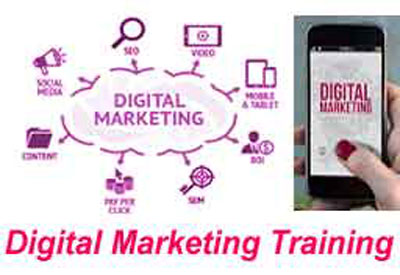
Ans: – Digital Marketing is about brand marketing tactics through the online mediums. It includes various techniques like SEM, SEO, Email Marketing, link building, etc
Or
Promoting
your products / Services / brands with the help of digital media.
Ex. Internet, Mobile, Search Engine, etc.
Q4. What is Inbound Marketing?
Ans: – In this technique, one can take help of social media, digital content in terms of e-
Newsletter, webinars, or e-books to increase the number of clicks on links. This helps them to learn about a company and the product offerings.
Q5. What is outbound Marketing?
Ans: – Outbound marketing refers to marketing strategies that pushes or force audiences to buy their products using traditional advertising methods.
Ex. Television ads, Radio Ads.
Q6. Why is online marketing preferred over offline marketing?
Ans: – Most
of the people go for Digital Marketing nowadays because of various benefits.
The online tool for marketing is SEO, Hosting, and Web Development. The numbers
of leads are extraordinary. One can reach many individuals online and set a
worldwide target.
Whereas the number of people who prefer reading newspapers, watching
television, etc. is decreasing, comparatively.
Q7. What are the Modules / Techniques of Digital Marketing (Inbound Marketing)?
Ans: – Search Engine Optimization
Search Engine Marketing
Social Media Optimization
Social Media Marketing
Email Marketing
Affiliate Marketing
Q11. Do you know useful Digital Marketing Tools?
Ans. Here are top Digital Marketing Tools:
Keyword Planner Tool
Google Search Console
SEO quake
Semrush
ahrefs
RankWatch
Moz
Alexa Ranking
Google Analytics
Crazy Egg Heatmaps
StumbleUpon
Favicon Generator
XML Sitemap Generator
SubmitExpress Link Popularity
Digital Point Keyword Tracker
Q12. List the advantage of Digital marketing?
Ans: – Inexpensive
Large audience
Easy to Measure
High conversion rates
Q13. Key Points of Digital Marketing Plan?
Ans: – The head of digital Marketing is responsible to create a digital marketing plan which outlines the objectives, target audience profile, content strategy, channel strategy, budget , and measurement.
Objectives
Buyer Personas: Who-What-Why
Content
Channel
Timelines
Budget
Measurement